Rice Ball (Onigiri). They're fun to make and are a staple of Japanese lunchboxes (bento). You can put almost anything in an onigiri; try substituting grilled salmon, pickled plums, beef, pork, turkey, or tuna with mayonnaise. To make yaki onigiri, broil (or grill) the rice balls, turning once, until both sides are evenly browned.
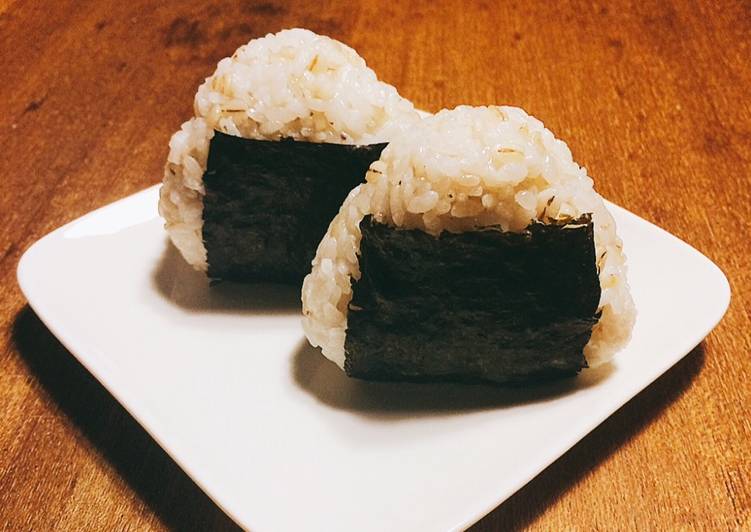 Traditionally, an onigiri is filled with pickled ume (), salted salmon.
Japanese rice balls are called onigiri or omusubi.
They are usually shaped into rounds or triangles by hand.
You can cook Rice Ball (Onigiri) using 4 ingredients and 7 steps. Here is how you cook that.
Traditionally, an onigiri is filled with pickled ume (), salted salmon.
Japanese rice balls are called onigiri or omusubi.
They are usually shaped into rounds or triangles by hand.
You can cook Rice Ball (Onigiri) using 4 ingredients and 7 steps. Here is how you cook that.
Ingredients of Rice Ball (Onigiri)
- You need 150 g of Cooked rice.
- You need 1 pcs of Seaweed.
- It's 1/3 pcs of Grilled Salmon.
- You need 1/2 teaspoon of salt.
They're fun to make and are a staple of Japanese lunchboxes (bento). Much like sandwiches in the West, onigiri is readily available in convenience stores across Japan and is great for a quick and easy snack. Traditionally, Yaki Onigiri is grilled over charcoal, which lends the rice balls a hint of woodsy, smoky flavor that is truly hard to resist. To make Yaki Onigiri at home, I use a cast iron pan to grill the rice balls instead.
Rice Ball (Onigiri) step by step
- Put plastic wrap on a cup..
- Put in 1/4 teaspoon of salt.
- Put in half of the cooked rice.
- Add grilled salmon, or anything you like. Can of tuna with mayonnaise, dried plum is also popular in Japan..
- Add remaining rice on grilled salmon..
- Cover with plastic wrap and form rice ball.
- Cover rice ball with seaweed. That's it!.
This helps to create similar crispiness to how it would taste when cooked over the BBQ grill. Rice ball is called "Onigiri" in Japanese. Mostly it's shape is triangle and you can either mix ingredients into rice or fill your favorite ingredient in the rice ball, or both! Onigiri, also known as Japanese rice ball is a great example of how inventive Japanese cuisine can be. It is also a Japanese comfort food made from steamed rice formed into the typical triangular, ball, or cylinder shapes and usually wrapped with nori (dried seaweed).